

The Cabinet of Japan recently approved a multi-pronged strategy to combat illegal cyber gambling. According to a report by the National Police Office of Japan, about 3.4 million people in Japan have used offshore gambling websites, of which about 1.97 million are high-frequency users, who spend 1.2 trillion yen (approximately $7.75 billion) a year on that “disturbed”.

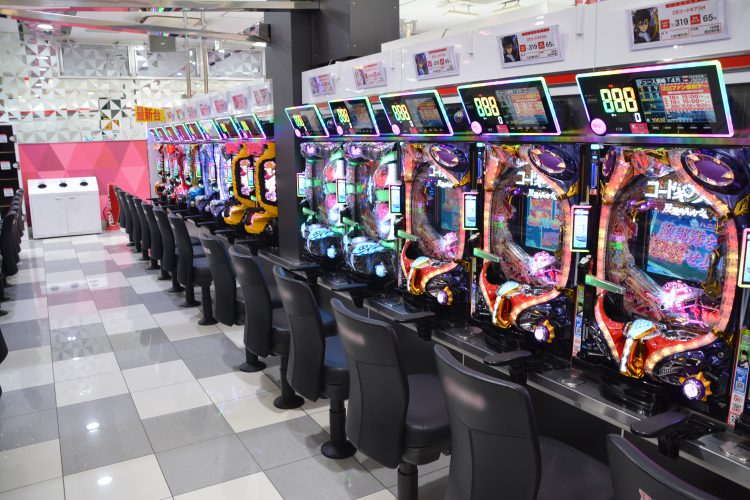
It is noteworthy that about 5 per cent of the gamblers are minors between the ages of 10 and 19. Changko Jun, Associate Professor of Psychiatry at the University of Sakuzu Medical Sciences, warned the Japanese News that “cyborg gambling on the Internet can be easily accessed with only one smartphone, worrying that children are drowning in it without the knowledge of their parents”. The new strategy will clearly inform the public that participation in online gambling is an offence in Japan even if the overseas operator holds a legal licence from another country. Perpetrators face a fine of up to 500,000 yen and repeat offenders are more likely to be sentenced to three years ‘ imprisonment. At present, Japanese legal lottery is restricted to public competitions such as pachinko marbles, national lottery tickets and horse racing. In 2030, with the opening of the country ‘ s first comprehensive resort on Osaka ‘ s Mangzhou island, entity casinos will be formally included in the legal map. A project entitled “Mico-Med Osaka”, developed by MGM in cooperation with Ores Japan, plans to equip 2,000 tiger machines, 200 gambling tables and thousands of video games.
Ulrich predicts that the annual flow of the resort will reach 20 million, creating a collection of 520 billion yen (about $3.4 billion) “to compete with mature resorts such as Macau and Singapore”. In order to control the participation of the local population, Japanese citizens are required to pay an additional 3000 yen to enter the stadium, and the additional municipal surcharge is required from Osaka residents. On behalf of Noriko Tanaka, the anti-gaming addiction organization points to the sharp contradiction: Japan currently earns about Yen20 trillion per legal year, but only Yen840 million is allocated for prevention projects. She refers to government data that 398 gambling-related suicides were recorded in 2024, “the actual number may be five times higher”. “Japan is decades behind the rest of the world in containing the dangers of gambling”, she stated to Tianya in September that “the anti-addiction response has made little progress”. The effectiveness of the Government ‘ s strategy to combat gambling, which was approved in March of this year, and the revised Basic Law on the Response to Gambling Addiction in June, which explicitly prohibits the establishment of new online casinos and associated advertising, remains to be tested. The recent case of a Japan-wide banging of alarm bells: a 145-year-old has been gambling online since the sixth grade of primary school, conceiting dozens of men “to feed their gambling addiction” by pretending to be friends with a female university student.
Network investment channels continue to expand with the emergence of new forecasting market platforms such as Predictit and Kalshi. This game of legitimacy and illegality, openness and control is testing the governance wisdom of Japanese society.